7 Commercial-Intent Website Metrics Small Businesses Should Track

Your website is more than just a place to hang your digital shingle; it’s a powerful engine for growth. But to know if that engine is actually taking you somewhere, you need to look at the right gauges. For small businesses, tracking metrics isn’t just about counting visitors; it’s about understanding which visitors are ready to become customers. This is where commercial-intent metrics come in. Before you can measure anything, though, you need a great starting point. The first step is to create a website that’s designed to capture these crucial data points from day one.
Table of Contents
This article will guide you through five key commercial-intent metrics that truly matter for your business. We’ll break down what each metric means, why it’s important for your marketing, sales, and leadership decisions, and how you can track it. Get ready to turn your website data into your next big business win.
TL;DR
- Focus on Key Metrics: Track commercial-intent metrics like conversion rate and cost per acquisition to improve sales and marketing strategies.
- Conversion Optimization: Enhance your website’s conversion rates by strengthening CTAs and simplifying forms. A clear CTA can significantly boost engagement.
- Understand Costs: Calculate CPA and CAC to connect marketing expenses with sales, allowing effective budget allocation.
- Leverage Gated Content: Use gated content downloads to generate high-quality leads, enhancing your sales team’s outreach.
- Speed Up Sales Cycles: Analyze time to conversion to identify bottlenecks and streamline your sales process for faster closings.
Why You Should Build a Website with Metrics in Mind
When you build a website, you are creating the primary tool for measuring customer interest and behavior. Designing it with metrics in mind from the start allows you to capture data that directly informs your sales and marketing strategies.
Every business owner wants a website that generates leads and sales. The secret to achieving this is understanding what your visitors are doing. When you build a website with a clear plan for tracking user actions, you’re not just creating a brochure; you’re building a data-gathering machine. This means setting up goals in your analytics, creating clear conversion paths, and making sure every button and form is trackable. Doing this from the beginning ensures you’re not missing out on valuable insights that can help you refine your business strategy and boost your bottom line.
Key Takeaways
- Building a website with analytics in mind allows you to measure what truly matters.
- A data-centric approach helps you understand visitor behavior and intent.
- Tracking from the start gives you the insights needed to improve sales and marketing.
1. Conversion Rate on Key Pages
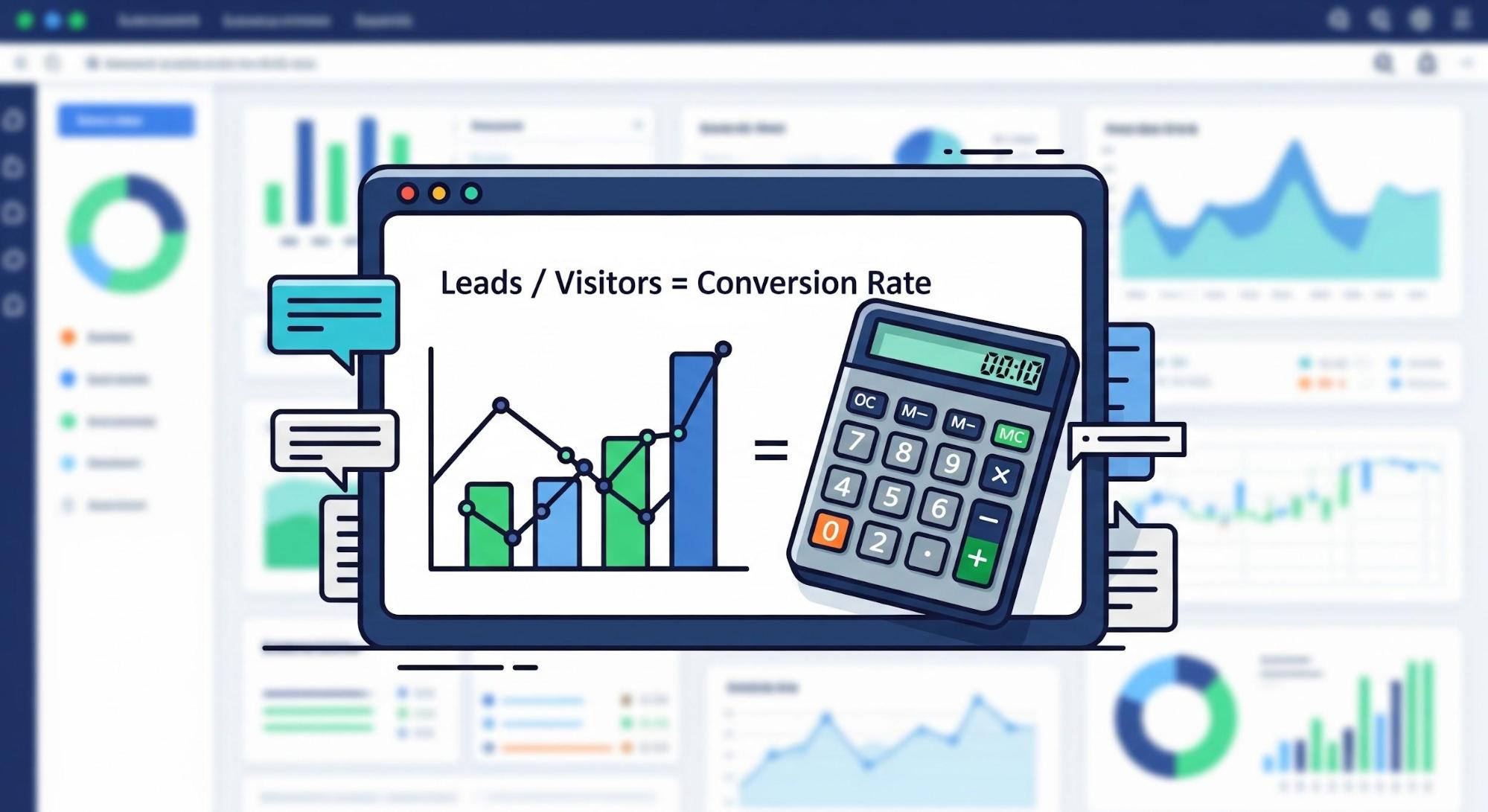
Your conversion rate is the percentage of visitors who complete a desired action on a specific page. Tracking this for key pages tells you how effective they are at turning interest into action.
Not all pages on your site are created equal. Your “Contact Us,” “Request a Quote,” and service pages have a high commercial intent. Their job is to convert a curious visitor into a warm lead. By tracking the conversion rate on these pages, you can see exactly how well they are performing their function. A low conversion rate might indicate that the call to action is unclear, the form is too long, or the page content isn’t persuasive enough. Analyzing this metric helps you make targeted improvements that can have a direct impact on lead generation.
How to Improve Page Conversion Rates
Making small tweaks can lead to big improvements in your conversion rates. The goal is to make it as easy and compelling as possible for a user to take the next step.
Here are a few strategies to try:
- Strengthen Your Call to Action (CTA): Instead of a generic “Submit,” try more action-oriented and benefit-driven text like “Get My Free Quote” or “Schedule a Consultation.” Make your CTA buttons stand out with a contrasting color.
- Simplify Forms: Only ask for the information you absolutely need. Each additional field you ask a user to fill out can decrease your conversion rate. Keep it short and simple to encourage completion.
- Add Social Proof: Include testimonials, case studies, or logos of clients you’ve worked with on your key pages. This builds trust and gives potential customers the confidence to move forward.
- Ensure Mobile-Friendliness: A significant portion of your visitors will be on mobile devices. If your forms and pages are difficult to navigate on a small screen, you will lose conversions. Test your pages on various devices to ensure a smooth experience.
Key Takeaways
- Conversion rate on key pages measures how well they turn visitors into leads.
- A low rate can signal issues with your CTA, forms, or page content.
- Improving CTAs, simplifying forms, and adding social proof can boost conversions.
2. Cost Per Acquisition (CPA)
Cost Per Acquisition (CPA) is a metric that calculates how much you’re spending to gain each new paying customer. It’s determined by dividing the total cost of a marketing campaign by the number of customers acquired. For example, if you spend $500 on an ad campaign and gain 10 new customers, your CPA is $50. Tracking CPA helps connect your marketing spend directly to your sales results, enabling smarter financial decisions. By analyzing CPA across channels like Google Ads, social media, or content marketing, you can see which strategies deliver the best return and allocate your budget more effectively.
On the other hand, Click-Through Rate (CTR) measures how often people click on your ad or link after seeing it. It’s expressed as a percentage and calculated by dividing the number of clicks by the total impressions (times the ad was shown). For example, if your ad is shown 1,000 times and 50 people click on it, your CTR is 5%. CTR is essential for understanding how engaging your ads or content are and optimizing them to drive more traffic or conversions. Both CPA and CTR are crucial metrics for evaluating and improving your marketing performance.
Key Takeaways
- CPA measures the cost to acquire a new paying customer.
- It connects marketing expenses directly to sales outcomes.
- Tracking CPA helps you identify your most profitable marketing channels.
3. Average Order Value (AOV)
AOV measures the average amount a customer spends per order. This metric helps you understand customer purchasing habits and identify opportunities to increase revenue. For instance, you can boost AOV through strategies like upselling, cross-selling, or offering bundle deals. Tracking AOV also allows you to pinpoint which products or services drive the most value, guiding your pricing and marketing strategies.
Key Takeaways
- AOV tracks the average spend per transaction.
- It highlights customer purchasing behaviors and opportunities to increase revenue.
- Use AOV insights to refine pricing, upselling, and cross-selling strategies.
4. Customer Acquisition Cost (CAC)
CAC calculates the cost of acquiring a new customer by dividing your total marketing and sales expenses by the number of new customers gained during a specific period. It’s a key metric for assessing the efficiency of your marketing efforts. Lowering your CAC while maintaining or increasing customer lifetime value can significantly impact profitability. By optimizing campaigns and targeting high-quality leads, you can reduce acquisition costs and improve ROI.
Key Takeaways
- CAC measures the cost of acquiring a new customer.
- Lowering CAC while increasing customer lifetime value boosts profitability.
- Optimize campaigns and target high-quality leads to reduce CAC.
5. Time to Conversion / Sales Cycle Duration
This metric tracks how long it takes for a lead to move through your sales funnel and become a customer. Shorter sales cycles often indicate an effective marketing and sales process, while longer cycles might signal the need for improvements in lead nurturing or pipeline management. By analyzing time to conversion, you can identify bottlenecks in your process and work on strategies to close deals faster, such as improving follow-ups or refining messaging.
Key Takeaways
- Time to conversion measures how long it takes leads to become customers.
- Shorter cycles indicate efficient processes; longer ones may highlight areas for improvement.
- Optimizing sales cycle duration can help close deals faster and improve overall efficiency.
6. Leads from Gated Content Downloads
This metric tracks the number of leads generated from gated content, where users provide their information (like an email address) to access premium resources. Content like eBooks, whitepapers, or webinars targets visitors seeking in-depth information. These leads are typically high-quality, as they’re actively researching solutions to their problems. Tracking downloads helps you identify which topics resonate most with your audience and informs future content strategies while providing your sales team with a list of engaged prospects.
Key Takeaways
- Gated content measures how effectively your premium resources generate leads.
- Leads from gated content are often high-quality and actively seeking solutions.
- It informs your content strategy and provides your sales team with engaged prospects.
7. High-Value Page Visits
High-value page visits count the number of sessions that include visits to pages indicating strong commercial intent, such as pricing pages, service details, or “book a demo” pages. These visits are a better indicator of potential buyers than overall traffic. Tools like analytics and AI-powered platforms can even identify companies visiting these pages, giving your sales team actionable insights. Tracking this metric allows you to understand who’s actively considering your offerings and helps you prioritize leads.
Key Takeaways
- High-value page visits track engagement with pages that signal purchase intent.
- More accurate than overall traffic, it highlights serious prospects.
- Provides insights for targeted sales outreach and stronger pipeline management.
Summary
Tracking the right website metrics is fundamental to making smart business decisions. By focusing on commercial-intent metrics like conversion rates on key pages, cost per acquisition, cart abandonment, leads from gated content, and high-value page visits, you can gain a clear understanding of what’s working and what’s not. This data-driven approach empowers your finance, marketing, and sales teams to work together more effectively. Start by building a website designed for measurement, and use these five metrics to turn your online data into tangible business growth.
FAQ: Commercial-Intent Website Metrics
1. How often should I check these website metrics?
For most small businesses, checking these metrics on a weekly or bi-weekly basis is a good rhythm. This allows you to spot trends and make timely adjustments without getting lost in daily fluctuations. For specific campaigns, you might want to monitor them more frequently.
2. What tools do I need to track these metrics?
Most of these metrics can be tracked using Google Analytics, which is a free and powerful tool. For eCommerce metrics, platforms like Wix eCommerce offer built-in analytics dashboards. You can also use marketing automation platforms to track leads from gated content.
3. What is a good conversion rate for a small business website?
Conversion rates vary widely by industry, but a typical range is between 1% and 3%. Instead of aiming for a universal number, focus on improving your own rate over time. Even a small increase from 1% to 2% represents a 100% increase in leads.
4. My website traffic is low. Should I still focus on these metrics?
Absolutely. Even with low traffic, these metrics are crucial. They help you understand if the traffic you are getting is the right kind and if your website is effectively converting those visitors. It’s better to have 100 visitors with a 5% conversion rate than 1,000 visitors with a 0.1% conversion rate.